ATF 2026: Cooperation and Development in Southeast Asia
10/02/2026
# tags: MICE , Events , ATF , Asia , Exhibitions , Tourism , Business Tourism
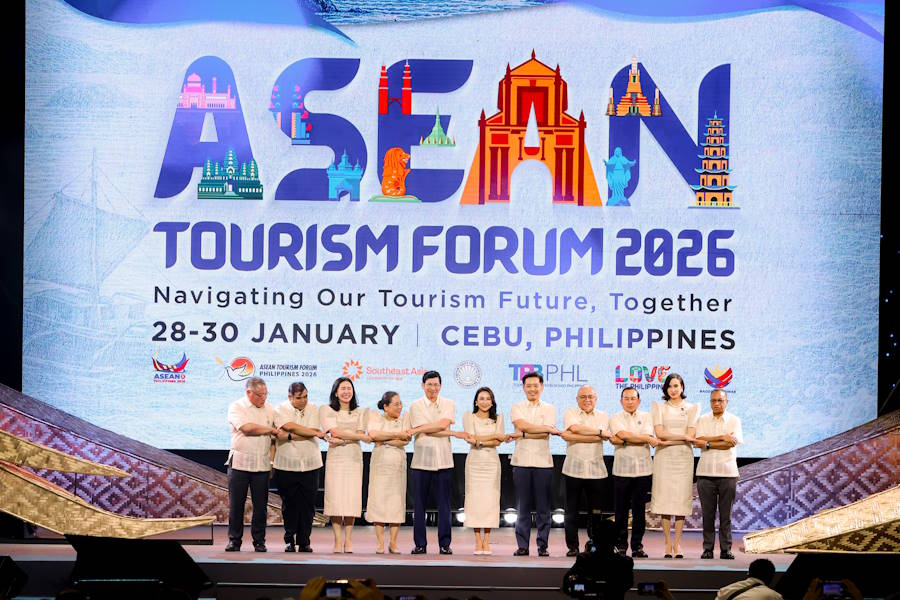
Cebu, in the Philippines, hosted the ASEAN Tourism Forum (ATF) 2026, which brought together high political representatives to define strategies for the future.
The Association of Southeast Asian Nations (ASEAN) has developed a five-year plan based on renewed cooperation for the turistic development in the region, which has shown a positive and continuous recovery in tourism. In 2025, there were approximately 144 million international visitor arrivals.
The ASEAN Sectoral Plan 2026-2030 guides collective actions and outlines the region's vision and plans for sustainable, resilient, inclusive, and quality tourism. The idea is to promote ASEAN member states (Brunei, Cambodia, Indonesia, Laos, Malaysia, Myanmar, the Philippines, Singapore, Thailand, Timor-Leste, and Vietnam) as a unified and diverse tourist destination, offering nature, adventure, culture, heritage, gastronomy, and experiences.
To showcase the wide range of offerings, ATF annually promotes ATF Travex, a trade fair that brings together suppliers from the region and international buyers, as well as giving some ASEAN destinations the opportunity to present themselves to journalists from around the world.
Resilience in the face of adversity
Proud to host ATF 2026, Maria Margarita Nograles, COO of the Tourism Promotions Board Philippines, said that although 2025 had not been an easy year, the country had remained resilient in the face of adversity. Recalling the 7,641 islands that make up the Philippines, she highlighted the resilience of communities and the continuity of tourism activity.
The national strategic guidelines for 2025-2028, which bring together government, the private sector, and communities, are based on four priorities: evidence-based marketing, with a plan that allows for a better understanding of travelers and communication with authenticity and clarity; strengthening the national and international reach of the Philippine tourism brand through partnerships with local and global influencers; positioning the Philippines as a MICE destination of excellence, capable of hosting world-class meetings, incentives, conferences, and exhibitions; and building strong and meaningful partnerships that promote sustainable, gender-sensitive, and community-based tourism practices.

Philippines with good tourism growth
After the pandemic, the Philippines has seen strong growth in tourism: 6,484,060 international tourists in 2025, 9% more than in the previous year; tourism spending worth 694 billion pesos (almost ten billion euros); and an average length of stay of more than 11 nights (compared to nine nights in 2019).
In terms of strategic interventions to boost tourism in the Philippines, highlights include visa-free entry for citizens of India, Taiwan, and China, as well as visa exemptions for cruise passengers; the Digital Nomad Visa, for those who wish to work remotely in the country; and VAT refunds for tourists, which aim to increase spending by high-value visitors.
In addition to the planned expansion of air travel, two programs (HOHO Transit Tours and Medical Tourism Concierge) have also been introduced to strategically position Manila as a major tourist hub. There are also 12 rest areas open across the country; 412,564 workers in the sector have been trained; affordable financing is available for tourism companies; and a ‘Filipinization’ program based on four components: architecture and design, gastronomy, music and performance, and business operations and activities.
The strategy also includes promoting the Philippines as a destination for golf and sports enthusiasts, as a filming location for international film producers, as a premier destination for diving, cruises, and wellness, and as a hub for international MICE events.
An example of investment in event infrastructure is the Mactan Expo Center, a large-scale event complex that recently opened in Cebu and hosted this year's ASEAN Tourism Forum.

Diverse experiences in Vietnam
In Vietnam, following the pandemic, the recovery and growth of tourism have been significant in terms of international visitors. In 2025, the country welcomed around 21.2 million foreign visitors (20.4% more than the previous year) and 137 million domestic tourists. The goal for this year is to reach 25 million international tourists.
Easy access to the country (90-day, multi-entry e-visa for all countries), strong air connectivity (direct connections to various cities around the world with more than 75 airlines and Long Thanh International Airport starting operations this year), hospitality, security, and the development of quality infrastructure and services are factors that make the destination attractive.
Vietnam offers a wide range of tourist attractions: culture and heritage (it has eight UNESCO World Heritage sites, various folk traditions and ethnic cultures, museums, and historic sites); nature and ecotourism (mountains, forests, rivers, caves, breathtaking landscapes, focus on sustainable, responsible tourism that benefits the community); beaches and islands (tropical paradises); adventure (water sports, diving, trekking, and caving); relaxation and wellness (luxury resorts, yoga, meditation, traditional therapies); and gastronomy (typical dishes and cooking classes).
Also noteworthy are the city experiences – where history meets modernity – and the focus on golf and luxury tourism. In addition, Vietnam presents itself as a MICE destination of excellence: Hanoi, Ho Chi Minh City, and Da Nang have world-class infrastructure and luxurious venues for large-scale international events, and on Phu Quoc Island, a new convention center will be built to host the APEC (Asia-Pacific Economic Cooperation) summit in 2027.

Indonesia focuses on quality tourism
Indonesia returned to pre-covid levels this year. Between January and November last year, it welcomed 13.98 million international tourists and 1.09 billion domestic tourists, resulting in US$13.82 billion in revenue. For this year, expectations are to reach 16-17.6 million international visitors.
Marketing strategies include leveraging artificial intelligence to improve the experience and expand reach, integrated collaboration with stakeholders, promoting the country at travel fairs, conducting familiarization trips, creating and distributing magazines, promotional videos, and content on social media, and promoting tourism to niche markets.
The country is looking for responsible tourists. The main markets to be targeted are mostly Asian, but Europe (especially the United Kingdom, the Netherlands, France, and Germany) is also part of the target audience. There is a focus on quality tourism, with themed programs around gastronomy, wellness, the sea, textiles, art, and design, in order to attract tourists who are willing to spend money. Nature and adventure, eco-friendly tourism, gastronomy, cultural immersion, wellness tourism, and bleisure are the tourist preferences.
Home to 76% of the world's coral species, 2,000 species of fish, over 100 species of sharks, and more than 30 species of rays, Indonesia is home to enormous biodiversity, which it aims to preserve. Even so, marine tourism is a priority. As is wellness tourism, with traditional practices dating back more than two thousand years, and gastronomy tourism, as the ‘mother of spices,’ where every bite is meant to be an experience. The country also has 6,074 tourist villages, which offer an inclusive experience, blending culture, nature, and authenticity, and appealing to awareness and sustainability.
Events are also an attractive factor, increasing interest in the destination. In 2025, the country hosted 99 events under Karisma Event Nusantara (a strategic program that promotes music and art festivals or events to boost tourism), 46 national events, 29 international events, and 24 MICE events, attracting 12.2 million visitors.
Last year, ASEAN countries were the most important source markets, followed by Asia and Europe. And for anyone looking for authenticity, depth, and cultural immersion, Indonesia offers a travel assistant (Maia) that uses artificial intelligence to help improve the visitor experience, and has launched the All Indonesia app, which integrates immigration, health, and customs services.

Singapore wants to attract MICE visitors
Singapore, the destination that will host ATF 2027, continues to show solid recovery and growth in tourism. In 2025, the country recorded 15.5 million international visitors between January and November, with the annual forecast standing at between 17 and 18.5 million. Tourism revenues reached S$15.7 billion (approximately €11.6 billion) in the first half of the year, with a total estimate of between S$29 billion and S$30.5 billion by the end of last year. The average stay was 3.5 days and the average hotel occupancy rate reached 82.4%, reflecting consistent and balanced demand.
China, Indonesia, Malaysia, Australia, India, the Philippines, the United States, Japan, South Korea, and the United Kingdom are the main source markets, and tourist spending is diversified, with an emphasis on entertainment and leisure experiences. The focus is also on quality tourism, and with this vision in mind, Singapore has outlined its Tourism 2040 strategy to attract MICE visitors or transit passengers, ensuring attractive development.
There have been improvements to the international airport and event venues. One example is the expansion of Marina Bay Sands, scheduled for completion in 2030, which will include a luxury hotel tower, a 15,000-seat entertainment area, and new premium MICE spaces.
The destination's appeal also comes from new experiences, and last year saw the launch of new attractions such as Illumination's Minion Land at Universal Studios Singapore. This year, the second phase of Mandai Rainforest Wild is planned; in 2027, the Porsche Experience Center will be born; and in 2030, Therme Singapore. And all this in addition to existing leisure events such as Singapore Art Week, the international concerts that the destination hosts, and the Waterbomb Festival. There is, therefore, something for everyone.
In terms of hospitality, this year will see the opening of Parkroyal Collection Orchard, followed by Mövenpick Singapore and Mövenpick Living Singapore in 2027. Singapore has also seen improvements in cruise tourism, welcoming new ships last year. This year, it will welcome Disney Cruise Line's Disney Adventure and, in 2027, Explora III. The strategy also involves marketing content with greater resonance and impact in key markets, attracting icons from the worlds of music and cinema.
But there is more news: Singapore has co-developed the Travel Agent Roadmap to empower travel agents; it has been working with tourism companies through Data Analytics Shift to enhance digital capabilities and optimize processes; and it continues to bring together technology startups and tourism organizations to test innovative technology solutions through the Singapore Tourism Accelerator.

Malaysia launches new tourism promotion campaign
As in previous years, Malaysia has launched a new tourism promotion campaign, Visit Malaysia 2026, to attract new tourists to the country. The new campaign includes advertising, tour packages, new products, incentives for extended stays, and a calendar of 318 events across the country. Singapore, China, and Indonesia were the most prominent source markets last year. This year, in Europe, the most attractive markets for the country are the United Kingdom, Germany, and France.
For 2026, Malaysian tourism officials have identified five travel trends: travel driven by authenticity and immersive local experiences; increased connectivity within the Asia-Pacific region; the integration of artificial intelligence to enhance the visitor experience with tailored recommendations; sustainable travel; and the demand for quality and comfort.
This year, Malaysia is making a strong commitment to medical tourism, with the ambition of becoming the preferred destination for this segment worldwide. To this end, the strategy involves promoting the value proposition of Malaysian healthcare, providing holistic and integrated experiences for patients, and showing that healing goes beyond treatment, integrating the country's cultural diversity before, during, and after treatment.
Malaysia is a competitive country, but it understands the need to work hard alongside the other ASEAN member countries. After all, to be a leading destination, they have to work with their partners.

Cambodia as a tourist oasis
Despite the conflict with Thailand, which intensified last year, Cambodia is a safe destination, as the country's tourism officials are keen to reiterate. In 2025, Cambodia welcomed 5.54 million visitors, mainly from Vietnam, China, and Thailand, recording a slight drop in tourist numbers compared to the previous year. At the European level, France and the United Kingdom are among the main markets.
To position Cambodia as a lush, cool, and peaceful tourist oasis, the country launched the Green Season campaign, running from May to October, when the country is at its greenest, and a campaign to show that the country is Muslim-friendly, aimed at attracting visitors from Indonesia, Malaysia, and the Middle East, through the launch of the Cambodia Muslim Friendly guide last October and the expansion of dining and prayer facilities at airports and shopping centers.
In 2026, there will be a strategy outlined for each target market. For the Western market, which includes Europe (France, Germany, and the United Kingdom) and the United States, the focus will be on high-value cultural tourism and ecotourism. For China, Japan, and Korea, there are pilot programs for visa exemptions and expansion of direct flights. To attract tourists from Australia, the focus shifts to luxury and long-stay travelers. And for the Philippines, Vietnam, Indonesia, Malaysia, Laos, and Singapore, which are part of ASEAN, the strategy involves a 'Muslim-friendly' campaign and the promotion of MICE tourism.
Attractions include festivals and events held throughout the year, Fam Trips planned with delegates, journalists, and influencers for 2026, and the promotional video ‘Cambodia: Kingdom of Wonders.’ One of the big developments in the country is the opening of Techo International Airport in September 2025 in Kandal province.
*The journalist traveled at the invitation of ATF 2026