AWC 2026: AI took centre stage at a congress brimming with humanity
29/06/2026
# tags: Artificial Intelligence , Congress , Associations
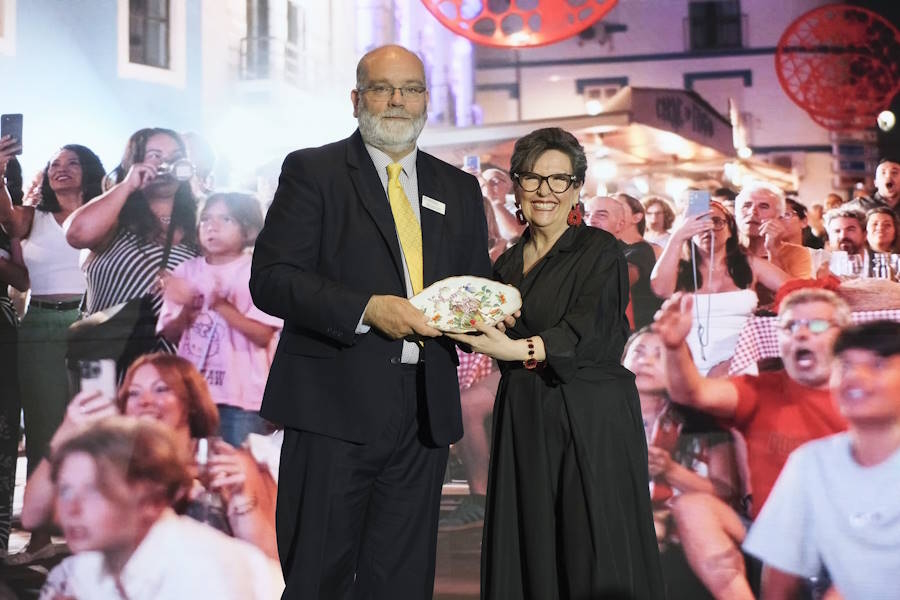
The Associations World Congress (AWC) 2026 took place from 7 to 9 June at the refurbished Lagoa Congress Centre in the Algarve.
Artificial intelligence dominated much of the programme, but the overall takeaway from this edition of the AWC ultimately revealed a broader message: technology may transform the sector, but it is the human element that will continue to define the success of events and associations.
Summing up the event, Linda Pereira, CEO of CPL Events and host of the AWC, began by noting that this year’s event had showcased a less obvious destination for the associations sector, demonstrating that it is possible to combine work, learning and experience. She argues that destinations can add value to participants’ experiences.
Thus, in promoting a destination that seeks to combat seasonality and establish itself within the sector, the decision to host the event in Lagoa proved successful: “the rooms were always full” throughout the conference and, at the same time, participants had the opportunity to experience the local culture and authenticity.
Linda Pereira explains that the aspect most highly praised was the human touch of the event. “What they’re praising most is that it was a people-centred event,” she said, emphasising that, at a time when events are becoming increasingly technology-driven, participants continue to value “the human touch, the interaction, the smiles, the food, the closeness between people, the warm welcome, the music, and the culture that permeated the entire event”. “This sector is all about people connecting with people, and we opened our hearts – and they liked what they saw,” she summarised. The overall assessment is therefore “very positive”, and the hope is that each participant will return with “500 friends”.
Damian Hutt, chief executive of the Association of Association Executives, which organises the conference, also gave a very positive assessment of the event, highlighting both the content and the experience provided by the host destination. “Absolutely fantastic,” he said of this year’s event, noting that the changes made to the format “really worked very well”. He also highlighted the hospitality, noting that “the people – the Portuguese hosts – are absolutely incredible”.
Preparing association leaders for future challenges
Artificial intelligence played a central role throughout the proceedings. Linda Pereira pointed out that the conference has an essentially educational purpose and seeks to prepare association leaders for future challenges. “Within the context of associations, events are a means of communicating with their members; therefore, there was much discussion here about artificial intelligence not replacing humans, but serving as a working tool.”
As well as technology, there were sessions “on how to organise an effective and people-centred event, and how to redesign our events for future generations” – those who will be leading and who do not like sitting in a room, she points out – as well as reflecting on leadership models in a global context that is “fragmented, confusing and conflict-ridden”.
For Linda Pereira, one of the key conclusions was the growing importance of the destination itself in the success of events. “Nowadays, the destination has become a key player in the event as well,” she said, arguing that choices must take into account the impact and legacy left on the host communities. Destinations that also offer excellence in event organisation should be sought out. “The event must be both educational and emotional. In fact, here we have combined the two and shown what is possible in a country like Portugal.”
Artificial intelligence: from tool to partner
Damian Hutt shared the view that artificial intelligence can no longer be ignored by associations, which need to decide to what extent they will use this tool and what their strategy will be. He pointed out that many organisations remain reluctant, but the reality is that their members are already using it on a daily basis. Therefore, “they cannot ignore it”, he emphasised.
Picking up on an idea put forward by the keynote speaker, Rui Maranhão, he explained that, “in fact, we are moving from a tool to a partner”. And, in his view, AI should be seen above all as an opportunity. “With AI, it is possible to create more value for members, and to develop new services and new products. And that is something associations need to think about,” he said. Otherwise, he warned, associations risk falling behind other market players.”
However, he argues that the adoption of these technologies by associations must be accompanied by a strategy, clear policies and appropriate training. “Without a doubt, they need to start managing the use of AI in a controlled manner, so that their staff use a system adopted across the whole organisation,” said Damian Hutt, adding that organisations need to set rules on the use of these tools and ensure that everyone receives specific training.
Although the conference devoted a great deal of attention to AI, Damian Hutt points out that other topics were covered at the event, such as issues relating to hybrid conferences. “Many associations need to stop being content with 5 per cent to 10 per cent of their members attending their main event and think about how they can reach the remaining 90 per cent or more. We had a fantastic presentation on hybrid events and discussed this in detail,” he emphasised.
“It’s not about technology any more; it’s about humanity”
When asked about the future, Linda Pereira was particularly optimistic. “I am not, nor have I ever been, in the slightest bit worried.” On the contrary, she believes that the more digital the world becomes, the greater the “need to interact with people who think like us, who act like us, who share our views” will be, and, consequently, the more relevant the events sector will become.
“All forecasts indicate that this sector will grow by around 19 per cent by 2035,” she points out. However, “it will transform” and, for that reason, “it is important that we stay ahead of the curve and are prepared for these changes”. In this regard, he believes that the role of the conference is to help associations prepare for change, equipping them “to transform painlessly” and helping them to overcome their fears associated with artificial intelligence.
She recalls the fears associated with the Industrial Revolution, computers and mobile phones, and points out that “humanity continues to rise to the challenge”. However, she adds, we now need to prepare ourselves, as this time “machines think and we have to move faster than the machines”.
Despite the technological changes currently underway, Linda Pereira remains convinced that the human factor will continue to prevail. “We have to stay one step ahead of these changes,” she said, offering one final certainty about the path forward: “It’s not about more technology; it’s about more humanity.”
*The journalist travelled at the invitation of the Associations World Congress 2026