

Generative AI: Beauty or the Beast?
02/10/2026
# tags: Artificial Intelligence , Events , Technology , Creativity
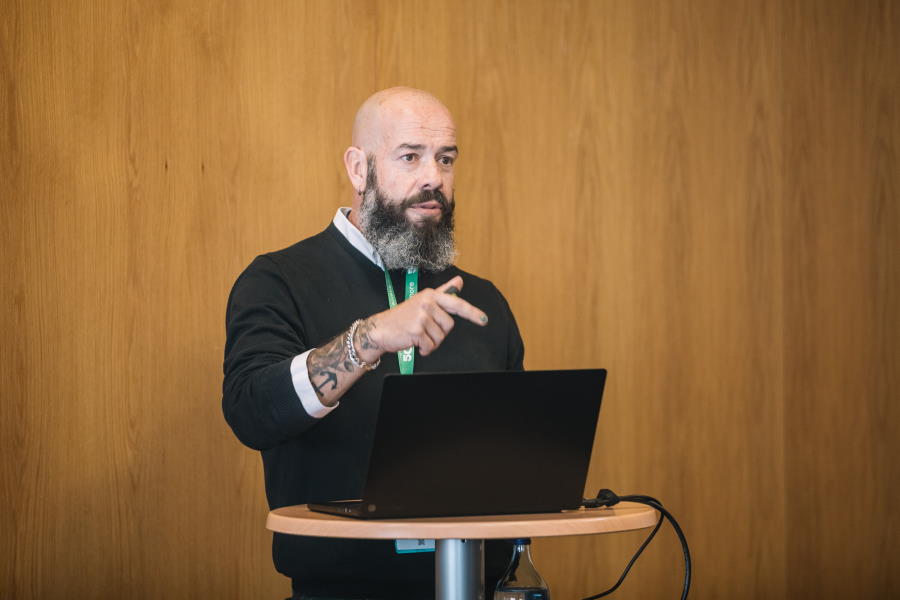
Lately, creativity has gained a new player: generative Artificial Intelligence.
We’ve never looked so good on LinkedIn; we all have selfies with our idols and we’re liking inspiring Reels that never actually existed. AI has entered our daily lives without asking permission, and it seems we’ve all gained superpowers.
But when it comes to content production, when we have to deliver what the client wants, exactly as they want it, the conversation changes. Here, the terrain is more serious. More critical. More demanding. AI is still a taboo subject among many creatives. There is a vague, almost instinctive fear. As if accepting it were to admit that our talent could be replaced. But the truth is that generative AI is not a seven-headed monster. Nor is it a machine that will steal the jobs of all creative professionals. AI is a tool. Powerful? Yes! But, even so, a tool.
To the layman, it’s the end result: the finished image, the video that makes an impression. To us professionals, it’s like an image editor or 3D software: it serves a concept. It doesn’t create it. With over two decades of experience in post-production and graphic design, I can clearly see both the potential and the pitfalls of AI. AI forces a change in the creative process. It changes the pace. It changes the flow. And it demands a new mindset, less linear, more exploratory. But it’s worth it.
Once the process has been ‘decoded’, the results are surprising. Even so, it’s important to dispel a myth: there is no magic button. Working with AI is a choreography. We jump from app to app, work around limitations, deal with bugs, glitches and frustration. And, of course, with the meter always ticking. Sometimes, the process of achieving the desired result demands as much—or more—creativity than the project concept itself, but the results are incredible. When we finally manage to make everything turn out just as we imagined, the feeling is one of pure achievement.
Working with AI has a very distinctive path to success. It starts with euphoria, followed by frustration, and if we work methodically, achievement and success follow. I often compare it to the feeling I had as a child when I went to a birthday party: “I’m going to eat all the sweets!!”. And then, seeing so much food all at once, I’d lose my appetite.
It’s the same with AI. We start with euphoria: everything seems possible. But when we really get down to work, the blank-page syndrome sets in. Nothing seems to work. From one day to the next, we feel as though we’ve lost track of what we’re doing. And then... suddenly… BAM. It starts to happen. The right image, the right texture, the right movement. Everything starts to fall into place. The vision becomes concrete. And the final satisfaction is addictive.
This process also raises questions of ethics and responsibility. For some time, I argued that content produced using AI should be labelled as such. But I’ve changed my mind. At a recent training session, a director used an interesting phrase: “that idea is outdated”. At first, I found it strange. But then I understood. If we were to identify every technique used in advertising or design, we’d have to include disclaimers on everything: “that isn’t the model’s natural eye colour”, “the burger you buy won’t look exactly like the one in the picture”, “the young man’s abs have been edited”. That’s not what matters. What matters is not crossing the line of legality and ethics. Not creating “untruths” in sensitive contexts. Not simulating real testimonials. Not inventing celebrities to endorse products. Not generating images that fuel conflict or misinformation. We must be responsible for the content we create.
The real enemy of AI is the pace at which it evolves. New developments emerge every week. Tools that were essential yesterday become obsolete. What was impossible becomes commonplace. We are forced to constantly relearn. To adjust processes. To redefine workflows. It’s exhausting. But, most of the time, it’s worth it. I don’t know what’s coming, but I’m keeping an eye out. And I know that the future of AI in content creation will hinge on three words: control, consistency and direction. Guiding AI with creative intuition, ensuring visual consistency and coherence, is essential for storytelling.
Because no matter how much technology advances, there is still no prompt that can replace a good sense of rhythm, pacing and narrative. AI is not the end of creativity. It is a new way of exercising it. With different rules. And different charms.
Note: This text was written without the use of AI… or was it?
Ricardo Guerra
Founder at Hello Movement