

Rui Batista: “Today’s event manager has to be very prepared”
12/12/2025
# tags: Agencies , Up Partner , Events
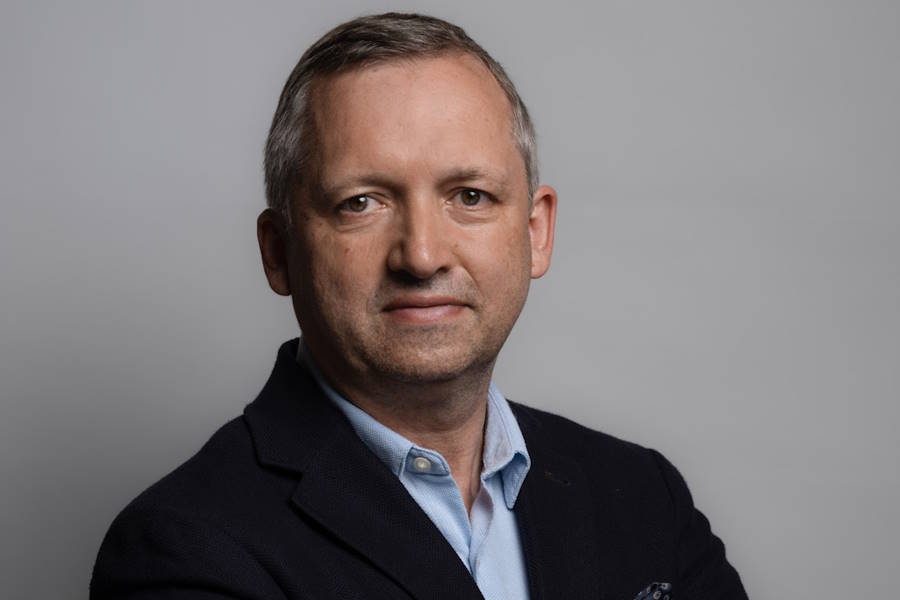
A sector in “complete transformation”, with multiple challenges, but still rewarding and attractive.
This is how Rui Batista, director of UpPartner, the Portuguese events agency that belongs to the 27Names network, sees the current panorama of events. We talked about processes, trends, clients and much more...
You’ve been working in events for 23 years. What were the main difficulties at the start of your career?
There were many difficulties, but, curiously, I sometimes feel nostalgic for the difficulties of the time.
Were they simpler?
They were simpler! (laughs) I came in at a time when, I remember, there were pagers, faxes – I’m still from that time – and it was a totally different rhythm. When I wanted to organise an event, it had to be more timely, in other words, it couldn’t be something that happened from today to tomorrow. But, on the other hand, it also allowed for a different kind of organisation, in other words, for things to flow in a more interesting way in terms of the event.
Compared to today, there wasn’t the multiplicity of suppliers that there is, nor the multiplicity of services, nor was Portugal as touristy as it is today. So, compared to today, it’s nothing different. Today, the speed at which an event is organised, the technologies that exists, is completely incomparable. In this respect, I think we’re in a phase of evolution, and now with Artificial Intelligence, the sector is completely changing.
What, in fact, are the major changes you can find between what the industry was when you started and what it is today in Portugal?
Technology is definitely a big change that has radically altered the sector. Another big change is the audience at events. Many years ago, the type of event audience was one, today the format of the event audience is completely different. In the sense that, in the past, most events were company commemorative events or business meetings. They still exist, but we’ve entered a chapter that’s much more about experiences, about engaging with brands, so events have moved towards becoming not just another marketing tool, but a tool for creating connections. And that has changed a lot the panorama of events today.
On the other hand, there’s also the whole market environment and I reinforce that. I think Portugal has become more and more of a destination on the map and this has also helped to boost many events in recent years. And finally, our ability to adapt in terms of the market. Bearing in mind everything that’s happened during a pandemic and everything that’s happened in terms of socio-economic situations in recent years, it’s commendable how companies adapt and how we’ve managed to move things forward and nobody stands still.
And with regard to the type of relationship established between suppliers, agencies and clients, are things better or worse?
I don’t think things are worse, I think things are different, in the sense that, many years ago, there were half a dozen reference suppliers for certain services, whether it was catering or decoration, in other words, there were the big companies and then not much else. Nowadays, there is a much larger universe and range of suppliers. Not just national suppliers, we often work with suppliers who come from abroad because they have something we need. For me, what has changed is the ease with which we can reach these suppliers, in other words, with technology helping, the ease with which we can reach them today, schedule a meeting, talk to a supplier in real time, who is on the other side of the world, all of this has boosted and created a very interesting dynamic in the market.
What about the relationship with the customer? Is it healthier, is it less?
The relationship with the client is more dynamic (smile). In our case, we work a lot with multinational companies, so we always have to be on top of the game, let’s call it that, in the sense that it’s not enough to say that we organise events, in other words, if the client uses an events agency, they want the event to go well and that’s it, they see us as specialists and professionals. But alongside this, many more challenges have arisen in recent years. There’s been the challenge of sustainability, of technology, now there’s the challenge of Artificial Intelligence, of the economic context, in other words, it goes far beyond events.
From my point of view, what has greatly increased is the complexity of ways of working. It’s obvious that this then interferes with the client-agency relationship, because it’s no longer so straightforward, i.e. you need large teams behind you to achieve certain results. That’s why I say it’s a much more dynamic relationship. Many years ago, the number of interlocutors we had at the event was half a dozen, today, if necessary, we work with 30, 40 interlocutors from different areas, all at the same time, because we have to. At events, audiences are increasingly looking for emotional connections, they’re looking for experiences outside the box, they’re looking for things that are more unusual and more original, and so events have also increasingly been pushing the limits, in other words, they’re pulling a little harder each time, to see what can be different, what can be more original, what can be unusual. And there’s a good side to this: it’s made the events more attractive.
I think that, given our country, we’ve managed to do some very cool things and I’d even say that, for me, we’re a benchmark in terms of events. But, on the other hand, they are also becoming increasingly complex. This means that, nowadays, an event manager has to be someone very complete, not just someone who is good at organizing services, they have to be much more than that.
The advantages of belonging to 27Names
How do you keep up to date? Is there time for that?
We never keep up to date in the sense of knowing everything. In our case, we have an advantage, we belong to 27Names and this allows us to understand what other countries are like, which have completely different contexts to ours, in terms of society, in terms of policies, how they overcome certain problems. This sharing gives us a great advantage in terms of know-how. On the other hand, an agency like ours, which has been in the market for 36 years, means that many suppliers come to us to present solutions. So we also end up receiving a lot of information from the market, and that’s important too. And then, for me, the most fundamental thing is to be out and about, talking to suppliers, hotels, going to venues, because there’s always something cool that’s happened, there are always things that can be explored, so I think the best way to stay up to date on events is to be a sponge. Always receiving information from all sides and then validating what interests us.
How did the opportunity to join 27Names come about?
The opportunity arose because, I think in 2012, we competed for the first time in the EUBEA [now BEA World] awards. We won first prize with a team building action for Coca-Cola. At the time, we were approached by this company, which was still very much in its infancy, and they asked us, ‘we’re forming a kind of agency club here, aren’t you interested in joining us?’ We made a presentation to the board, were admitted and have been part of the network ever since. The great added value has been the exchange of knowledge, because we’re talking about agencies that work only in the area of events, some larger, others smaller, obviously. It has a lot to do with the scale of each country. It’s been a very rewarding experience, it’s not just about the commercial relationship of sharing clients or bringing in business, it’s the know-how itself of understanding how things happen in other countries, getting the best out of each other’s experience, sharing cases, suppliers, in other words, there’s a lot of knowledge and that’s what I value most.
Do you really notice differences in mentality, in the approach to events, depending on the market?
There are, in fact, many differences. I’ll give you a very clear example: the Hungarian market. At the moment, Hungary has an events market that ends up being a dictatorship-type market, meaning that you either work with state companies or you can’t work. And so, while we’re here in our own little corner of the world, there are countries that are struggling with very real difficulties due to foreign policies, due to the situation we’re experiencing with the war between Russia and Ukraine. In all the countries that are close to that border, it’s easy to imagine what it’s like to organise events at the moment. We have a Ukrainian agency in the network and they work outside Ukraine most of the time and have a bunker where they organise events. On the other hand, we have the scale, you get to Paris and you have the Olympic Games, or events that are very big and that we don’t have, unfortunately, or the capacity of facilities to host that kind of event, nor do we have that financial capacity, nor the capacity in terms of services.
Is hearing from the client’s side that ‘the event was fantastic and now what are you going to do for the next one’? Is it like a writer looking at a blank page?
I don’t think it’s a cause for anguish and I also say that a good event doesn’t necessarily have to be more and more wow, sometimes there are simple things that are wow too. In fact, I’d say that the simplest ideas are the ones that get the most results. Events have obviously become increasingly challenging in terms of the complexity of the organization and, above all, in terms of time. And that’s one of the differences I notice a lot with the other countries in the network: the time it takes us to execute events in Portugal is incredibly faster than the time it takes other countries to execute events. A simple example, a conference, most other agencies start closing spaces sometimes a year in advance, we often close the space a month before and the event takes place. So this planning, this way of working is different and that makes things even more complex.
Events have shown enormous vitality. As someone who comes from the field of psychology, what is it about events that helps to convey a message, to create a relationship?
Many years ago there was communication above and below the line, and everything went through the above, television, the press, etc. and then events were at the end of the tail, and that was the execution on the ground, and that was what the agencies above, and I worked for agencies above, didn’t want to do. That balance changed radically, because people began to want to have more connections with brands and an ad didn’t allow that. And with social media, people began to connect almost instantly with brands and the way they communicate.
What has changed a lot is the way we consume, the consumer has become much more of an owner of brands. In a way, they are a small shareholder without having shares, because they can make a brand a winner in the market, but they can also destroy it. Events in this environment have grown. They’re done by people for people, and therefore allow you to create a connection there that is very difficult when you communicate massively, because you don’t know who you’re reaching. At events we know exactly who we’re reaching.
If you were faced with someone who was thinking of starting to work in events, what would be your biggest piece of advice?
I think the biggest piece of advice is that the person has to realize that, from the moment they start working in events, they have married an area. Why is that? Because those who come to events have to have the mentality that the idea of having hours for this and that is over, events are something in which we move at the pace of the companies, of what needs to be done, of the hours of the events, of the dates, so, in a way, we often no longer have a life of our own. It’s a job that requires a lot of dedication, a lot of effort, a lot of professionalism and, nowadays, a huge amount of knowledge in different areas. Honestly, I think it’s hard to find good professionals in the events field these days. Because it’s an area that is becoming increasingly complex in the way it works. At the same time, those professionals who enter the events field, it’s also challenging for them to continue working in events for a long time, because most people sometimes end up changing areas, or changing roles, because, in fact, nowadays it’s a very dynamic, very complex area.
Cláudia Coutinho de Sousa and Rui Ochôa