

Sponsorship you can feel and measure
10/07/2026
# tags: Brands , Brand Activation
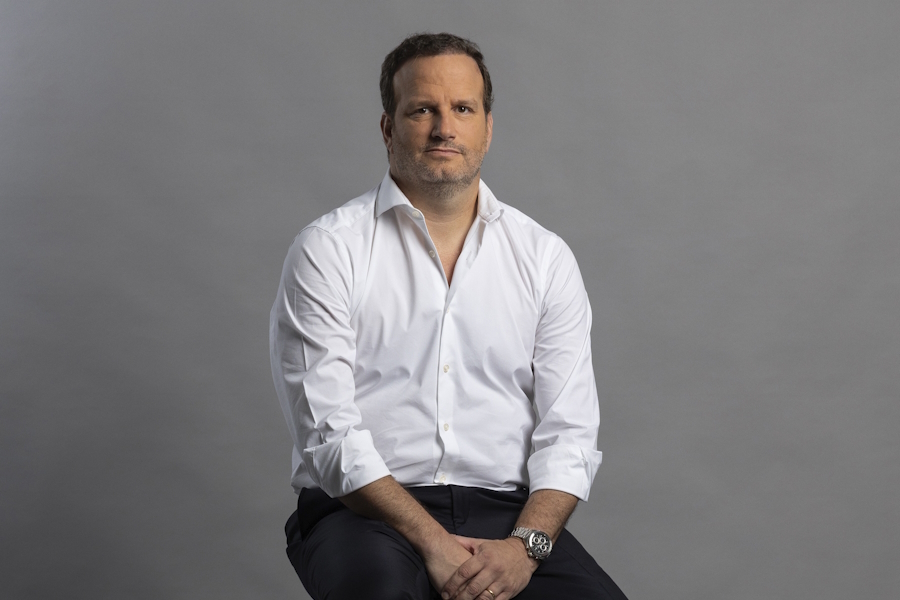
Event Point set me a challenge that I know inside out: to discuss why visibility is lacking.
My name is Miguel Guerra and, for around 13 years, I headed up the Sponsorship and Events department at MEO. More than the importance of the position, it is the experience in the field that counts: I have seen countless times — from surfing to music festivals, from football clubs to the national team, from meetings between MEO Ambassadors to the MEO Arena — that impact takes work, but it pays off in real preferences. A logo fills square metres; a well-thought-out activation creates centimetres of memory — and it is in that memory that NPS, recommendation and the desire to return live on.
Events are not showcases; they are living systems. They are ruled by the wind, the rain, the queues, the sound, the rituals and the right second between the goal and the final whistle. That’s why it all starts with a briefing with non-negotiable principles: organic integration of the brand into the context of the event; visual elements and experiences that ‘breathe’ identity (light, icons, intelligent repetition) even when the logo is not present; and an obsessive focus on the experience.
Once, an agency hit the nail on the head: ‘More than wanting people to go to the events we sponsor, we want them to go because we sponsor them.’ That’s it.
We grew up counting logos, but value isn’t counted that way. Value happens when the brand improves people’s lives on the ground: it shortens queues, provides shade in the heat, offers a moment worth sharing. Creativity, here, isn’t jargon — it’s engineering applied to the audience’s journey. A good idea survives the wind and logistics, works when it counts, and leaves a clear signature: check-ins that fly, water when it’s needed, recovery areas that actually recover, signage that guides without shouting, useful micro-content. When the promoter feels that the brand adds value, the right door opens; when the public feels that improvement, their hearts open — and their wallets.
In Portugal, even when you ‘get a ticket,’ there is a choice. And choice brings expectation: sponsors don’t just buy space, they buy responsibility. The example of Hyrox, a fitness modality that is very popular at the moment, explains well what matters today. In the end, there is no medal for the drawer or a T-shirt to sleep in; there is a patch, a simple embroidered emblem, which lives in everyday life — on your backpack, hoodie, cap — and says ‘I was there and I overcame it’. A displayable memory. An identity that travels. This is what sponsorships should seek: fewer disposable gifts, more useful pride. It’s not about accumulating ‘things’, but about prolonging the story and giving people material to tell it for us.
For those designing the event booklet or finalising the 2026 budget, the right question is not ‘where do I put the logo?’, but rather ‘what part of the experience will objectively be better because of me?’. The answer requires method, not faith. Think of the event as a product with a complete funnel: before (expectation and intention), during (participation and interaction time), after (memory, recommendation and purchase). Measure what matters: NPS with baseline, signs of brand lift at D+7/D+30, active participation and dwell time as proof of usefulness, vouchers/unique codes linked to POS and e-commerce to close the loop. Less vanity metrics, more real behaviour.
On the execution side, I learned a few simple things: in football, ritual and timing are worth their weight in gold; with ambassadors, credibility is built every day, not in a single post; at MeoArena, utility can be choreographed with the show to be present without being intrusive. The constant is always the same: when the brand helps, people notice; when people notice, the business responds.
My acid test hasn’t changed: if we remove the logo, is the experience still better thanks to the brand? If so, there’s an impact. If not, it’s just decoration. In 2026, the choice is clear: invest in metres of static visibility or centimetres of useful memory. I know which side I’m on — the side of activations that add service, create rituals, and leave marks that are used, remembered, and measured. Less logo. More legacy.