The importance of including breaks, silence and well-being in events
28/04/2026
# tags: Events
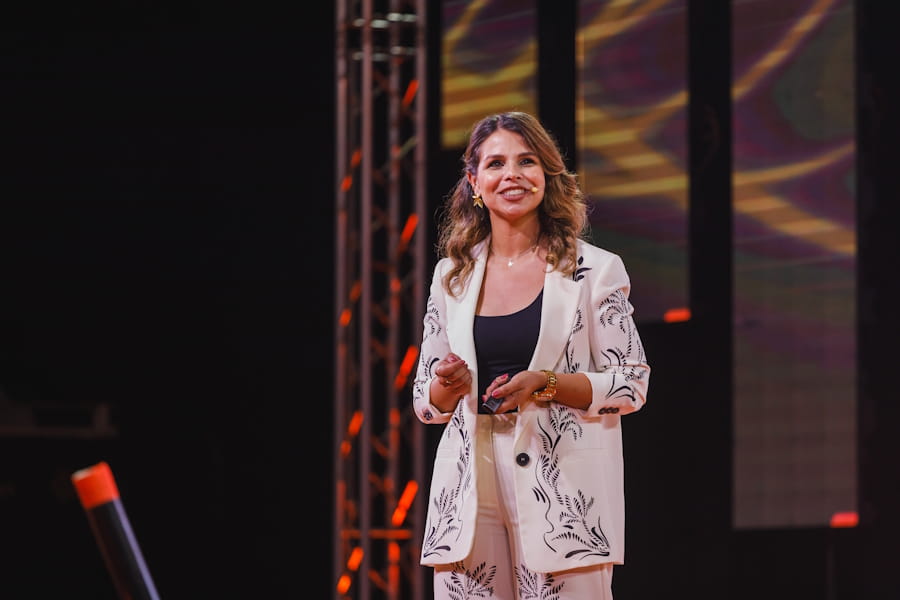
In the events industry, thinking about the well-being of participants should increasingly be a priority.
The world moves at a frenetic pace and everyday life is full of stimuli that challenge us to be constantly alert and available. Many events end up reflecting this intensity, which can become overwhelming for some of their participants.
“Long and very intense events can cause mental fatigue comparable to an emotional marathon,” says Filipa Jardim da Silva, clinical psychologist, author and CEO of Academia Transformar, in an interview with Event Point International.
Therefore, including structured breaks and moments of silence is a way of valuing well-being and providing space for assimilation and reflection. “We gain by viewing an event as a symphony: it does not live only on the notes, but on the silences that give them shape,” argues Filipa Jardim da Silva, who also leaves tips on good practices.
What are the main stress factors affecting event participants today?
The main stress factors at events are sensory and information overload: too many hours of stimuli (light, sound, interactions), lack of structured breaks, and pressure to “take it all in”. Studies show that the human brain can only maintain focused attention for about 45–50 minutes before entering cognitive fatigue (American Psychological Association, 2022). In addition, for many, social networking is as demanding as public speaking because it activates areas of the brain associated with fear of evaluation (amygdala). Finally, the temptation for participants to record everything with photographs and videos adds a layer of sensory overload, because in addition to experiencing the event itself, there seems to be a need to show the world on social media that we are there.
How can the intensity and duration of an event influence the mental health and well-being of participants?
Long and very intense events can cause mental fatigue comparable to an emotional marathon. The brain releases more cortisol when it is in prolonged stimulating environments, which reduces memory capacity and increases irritability. A study in the Journal of Occupational Health showed that long days without breaks increase the likelihood of mental exhaustion by 60%. I have accompanied professionals who left three-day conferences with dozens of lectures and hundreds of participants, and the phrase was always the same: “I learned so much that I didn’t retain anything” or “it was great, but I’m exhausted.”
What signs of anxiety or mental fatigue can be identified during an event and how should organisers respond to these situations?
The most common signs are physical agitation (repeatedly moving legs or hands), expressions of tiredness (yawning, vacant stare or even brief moments of sleep), difficulty concentrating with people constantly looking at their mobile phones as an escape. Anxiety can manifest itself in faster and shallower breathing, excessive sweating or sudden isolation. The role of organisers is not to ‘diagnose’ but to create supportive spaces: quieter areas, fresh water available, snacks that provide quality nutritional supply, frequent breaks and staff trained to approach participants with empathy. Some organisers want to go further and reinforce the psychological safety of events, which is why at Academia Transformar we have already participated in some initiatives ensuring psychological first aid at events. In practice, this involves a clinical psychology professional trained in crisis intervention and a more sheltered space in terms of stimuli and with some privacy.
Elements such as lighting, sound, temperature, and room layout have an impact. What best practices do you recommend to reduce the risk of sensory overload?
Neuroscience shows that our senses are gateways to the nervous system. Too bright light or prolonged loud noise triggers a stress response, as if we were in a constant state of “fight or flight”. Some good practices: natural or adjustable lighting; mild temperature (between 20–22ºC is ideal for staying alert without discomfort); audio with controlled peaks (WHO recommends not exceeding 85 dB); room layout in proximity islands, which promote connection without generating mass pressure. Just like the body, the environment also has a ‘nervous system’ and, when it is balanced, everyone functions better.
How can intensive learning or networking sessions be balanced with breaks and rest periods?
A good event should respect the brain’s ultradian cycle (biological patterns of energy and concentration): 90-minute periods of attention followed by at least 15 minutes of break time. This allows information to be consolidated into long-term memory. Unlike the circadian cycle, which regulates sleep and wakefulness over 24 hours, ultradian cycles are small blocks of energy within that longer period. Practical suggestion: alternate intensive lectures with active breaks (stretching, short walks, open spaces, calm music) and redesign networking for shorter, more focused formats instead of social marathons.
What mindfulness or wellness practices can be implemented simply and effectively at an event?
Small gestures have a big impact:
- A two-minute guided breathing check-in at the beginning of each lecture, or at least at the beginning of the morning and early afternoon;
- These check-ins can be brief moments of silence between blocks of content;
- In the toilets, we can have stickers with brief instructions for abdominal breathing and a more conscious pause when washing hands;
- At coffee break tables, there can be an invitation to eat mindfully: first feel the weight of the food, observe its colours and textures, and taste it slowly;
- Spaces with plants or nature (biophilia) have been proven to reduce stress by up to 15% (Journal of Environmental Psychology);
- Spaces for formal meditation: massage chairs or comfortable floor mattresses, with headphones available and guided meditation, so that people can access short 5- or 10-minute meditations.
I have had participants who said that one minute of silence was worth more than an hour of slides. Because the brain needs space to breathe, not just information.
From your point of view, are companies and organisers now more attentive to the psychological well-being of participants? In what ways is this change noticeable?
Yes, there is a clear change. We are increasingly seeing events with ‘well-being corners’, programmes that include breathing or yoga sessions, more balanced meals and structured breaks. Companies have realised that an exhausted participant is a participant who neither retains nor creates value. A Deloitte study (2023) showed that 70% of leaders recognise that employee well-being is now a critical factor for productivity and innovation, and this is already reflected in the way they think about their events. There is still some way to go in terms of the psychological safety of events and this balance between noise and content, silence and pause, but there has been a noticeable evolution. I would say that we gain by viewing an event as a symphony: it does not live only on the notes, but on the silences that give them shape.

Safe spaces, a trend in events
Several events are investing in safe spaces, which aim to isolate participants from the intensity of the programmes, shielding them from stimuli and allowing them to recharge their batteries. This year’s edition of Conventa featured a quiet room, created by the Austrian company Calm Nest Collective, which aims to offer a ‘sanctuary’ at busy events for anyone who needs a break, "because we know that events can be really overwhelming," the company said in an interview with Event Point. The Meetings Show 2025 also featured a space dedicated to well-being, with plants and reclining chairs for participants to sit comfortably. These are just two examples of how concern for the well-being of participants is a growing trend in the sector. Also at Reinvent the Event, which took place in October in Estoril, Portugal, there was a Quiet Room designed for neurodivergent people.
Relaxation activities
Some events offer delegates moments of relaxation and decompression, such as yoga or meditation activities. Others offer the opportunity to participate in initiatives that not only bring tranquillity to participants, but also promote and support local communities. The day before IT&CM Asia 2025 kicked off, an initiative by the Thailand Convention & Exhibition Bureau took some delegates to the outskirts of Bangkok for various experiences and workshops: making key rings from recycled materials, creating aroma diffusers, or tasting tea and sweets typical of Khung Bang Kachao.