

Pulse 2026: the events industry beats strongly in Riga
12/11/2026
# tags: MICE , Events , Pulse Forum , Latvia , Destinations
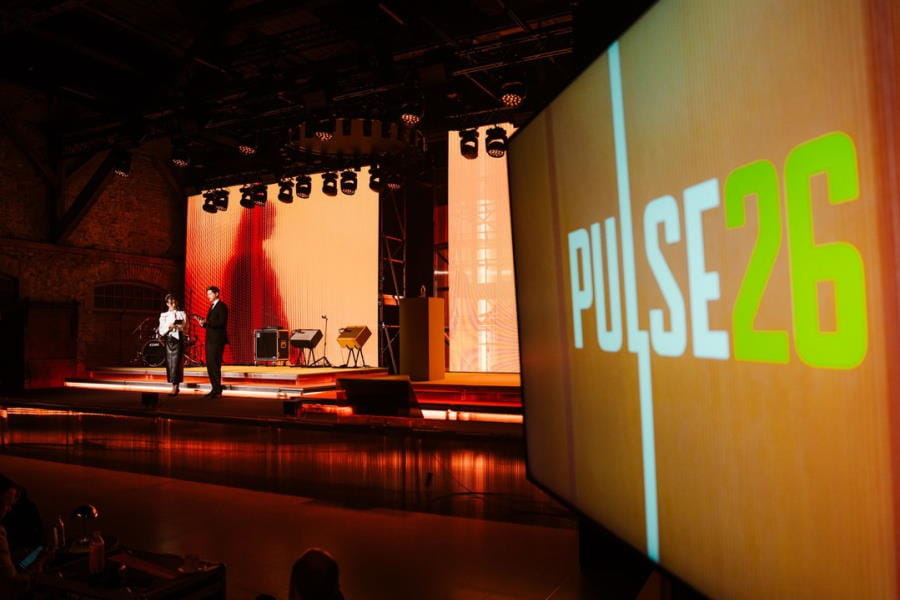
The international Pulse forum made its debut in Riga, turning Latvia’s capital into a meeting point for the events industry.
Professionals from 17 countries gathered on 28 and 29 October at Hanzas Perons, a former cargo railway warehouse that has been given a new lease of life as an events venue in Latvia’s capital. Over two days, Riga put itself on the international events map as a destination capable of bringing people together and generating new ideas for the future of the industry.
The idea behind Pulse first emerged four years ago, when Toms Veiss, the event’s founder and producer, met several leading speakers at international events. He describes them as “a fantastic group of people” whom he wanted to bring to Latvia. “Then I came up with this idea that we need to create something for our industry, something that inspires, something that gives this drive to be in a pulse.” It was an idea he carried with him for four years – an event that “has always been about people” – and which finally came to life after a “long and challenging” year.
 Toms Veiss | ©Pauls Zvirbulis
Pulse is not simply another event aiming to inspire. “It's not only a story about inspiration. We have a lot of inspirational conferences, but this is a place where we need to look in the eyes of the problems, and then we can move forward, innovate and create something more meaningful. So, we want to give them the best from our speakers, and also the story of Pulse itself which begins when you are landing in Latvia, till you are leaving Latvia. It's about food, our socks [featuring the event’s colours] and the smallest details. Everything is something; it's a whole story,” he explains.
Belonging, sustainability and immersive experiences
The programme featured 35 speakers and opened with social anthropologist Martins Daugulis. In his session, ‘How Together Becomes a Verb’, he revisited the history of the world to show that “‘together’ is not a place, together is something in fact we do”. “Despite cultural differences, human beings will do everything they can to be together. The same applies to the world of events,” he said.
Janne Björge, internal brand advisor and founder and CEO of Nord Core, believes that, within a company, “when people feel a sense of belonging, anything is possible”. In his session, ‘The Future of Belonging’, he explored the importance of belonging within teams, a concept that also applies to the relationship between brands and their customers, and between events and their participants. He argued that better leadership is not about constantly looking over people’s shoulders, but about giving them confidence and trust. “Attention makes people look, belonging makes people stay, mattering makes people contribute,” he said.
 Janne Björge | ©Pauls Zvirbulis
Sustainability was also on the agenda, with several perspectives brought together around one question: how can we continue to deliver events with the same value and quality while reducing their environmental footprint? The panel made it clear that sustainability goes beyond the environmental dimension, also encompassing the management of human and financial resources. At an event, sustainability should be an organic part of the experience rather than simply a matter of ticking boxes and meeting requirements. Catering is another area with an impact. Making an event vegetarian or vegan simply because it is fashionable is not enough; the local origin of products and the resources involved must also be taken into account.
In the session ‘The Future of Immersive Experiences’, Patrick Roubroeks explained how art provides a constant source of inspiration for his work. The founding director of Xsaga believes that everything is interconnected, sharing examples of campaigns inspired by works of art across a wide range of artistic disciplines. “We see something, adapt it and create something new – beautiful, new things,” he explained, taking inspiration from what we encounter in real life and pushing it further.
 Patrick Roubroeks | ©Pauls Zvirbulis
There was also time for one session devoted to technical production, with Stephan Dombek (Showlab) taking audiences behind the scenes of major productions and highlighting the importance of the invisible network of people who make sure that lighting, sound and staging work seamlessly; and other sessions focused on cities, exploring how events can transform destinations; and on brands – Jens Oliver Mayer (Jack Morton Worldwide) argued that brands need more than visibility: they need to become something people miss. He also suggested that “real is the new premium”, as opposed to manufactured authenticity.
Other topics included touring productions, with a discussion on how streaming has changed expectations around live concerts and what makes a live performance irreplaceable; and business, exploring the relationship between agencies and clients. The latter panel addressed budgets, risk, creativity and proposals, as well as the importance of agencies working directly with decision-makers.
Events in uncertain times and creativity at the table
The second day of Pulse featured a particularly moving session, which ended with a standing ovation. Natali Shestakova, CEO of Plombir Event, an events agency operating in Kyiv, Ukraine, spoke about organising events in unpredictable times. She explained how important it is for people to find ways to live a normal life, or at least feel that life is normal, even during wartime and even when events have to take place in a shelter.
Adaptation is one of the key words, and events have taken on a new meaning, as they “create micro-spaces where, for a while, people can recover some of the carefree feeling they had before the war”. She believes that, at this moment, “the only solid currency is human connection” and that “people need people, which is why events continue to bring communities together”.
 Pulse Forum | ©Pauls Zvirbulis
Looking at the local perspective, one of the sessions addressed the retention of Latvian talent and the dilemma facing young people as they decide whether to stay in the country or move abroad. There was also a look at the readiness and calm determination of Raivis Pelss, a major events operations specialist from Latvia who has made his mark on some of the world's biggest stages; as well as at the work of Latvian professionals whose projects are gaining recognition internationally.
Artificial intelligence also featured on the agenda. Kristaps Cirulis (Shift2 and Shipyard AI) argued that, “unlike virginity, with AI you can have a lot of first times”, encouraging participants to go beyond their imagination and describing AI as a tool everyone should experiment with and explore. Another session explored the idea of a work of art as a team effort. Designer Germans Ermics emphasised that expertise should not be limited to what we can achieve on our own, arguing that the most important things are “working with others, building trust and creating collaborations”. The changing nature of event venues was also discussed, with a panel exploring how spaces can come to life and be reinvented according to the events they host, and how expectations around venues are evolving.
The business programme concluded with a journey into a world where creativity and gastronomy go hand in hand, coming together around the table. Jon Angelo Gjetting, Creative Director at Denmark's Alchemist restaurant, spoke about a venue recognised around the world not only for what it serves, but also for how it does so. “It’s not just food; it’s art, performance.” Food becomes a medium for storytelling. Through the D.E.V.I.C.E. creative method (Discover, Explore, Validate, Instruct, Create and Enhance), everything is designed to make guests “feel emotions”. Alchemist “is a restaurant, but it is also an experience”, he assured the audience.
“Riga is full of creative and talented people”
Latvia’s events industry is experiencing a particularly dynamic period. “I think we are actually very good at this,” says Toms Veiss. But Pulse was also created to bring the different players in the sector closer together, providing a platform where agencies, clients and other stakeholders can meet, share experiences and realise that they are working towards the same goals. “We are together in this,” the founder emphasised, highlighting the importance of cooperation. “If we work together rather than on our own, we can achieve much higher results – and we can stand out in Europe too,” he added.
Asked about Riga’s strengths as a destination for meetings and events, he pointed to the quality and diversity of its venues, great flight connections, gastronomy and the excellence of its service providers. In his view, the city has everything it needs to establish itself as a major “hub for creativity”.
In this context, hosting Pulse represents an opportunity to strengthen Riga’s position. With professionals from 17 countries attending its inaugural edition, the event provided a showcase for what the city has to offer, potentially opening the door to new international gatherings in Riga and bringing benefits to the local economy.
 Pulse Forum | ©Edvards Janitis
At the opening of Pulse, Viesturs Kleinbergs, Mayor of Riga, highlighted the Latvian capital’s potential as a destination for the events industry, identifying three essential factors: “talent, venues and ambition”. “Riga is full of creative and talented people,” he stressed, also pointing to the diversity of venues available to host different types of events and to the city's gastronomy – not only the quality of its food, but also its ability to deliver experiences that go beyond the meal itself. “We want Riga to be a place where ideas grow and become reality,” said the mayor, underlining the city's ambition to develop international partnerships and to achieve more and do better.
Toms Veiss is already looking ahead to the next edition of Pulse, confirming his intention to organise a second event next year. “It will be challenging again; new speakers, new content...” he said. Looking further ahead, and acknowledging how difficult it is to make predictions in a constantly changing world, he made his ambition clear: “I hope this will be the main hub for the European audience to come, to get inspired, to get in this one ‘pulse’, to understand the trends, to understand where we are right now and where we are heading next,” Toms Veiss concluded.
*The journalist travelled at the invitation of Pulse Forum 2026
© Maria João Leite Newsroom
© Prague’s Industrial Palace reopens and re-awakes Prague’s MICE potential Newsroom
The reopening of the renovated Industrial Palace in Prague brings a much loved art-nouveau heritage landmark into play for a new generation of visitors and events. Ramy James Salameh attended Designblok 2026 the first exhibition through the doors to witness the upgraded facility in action.