

And climate change has transformed the event
23/09/2026
# tags: Events
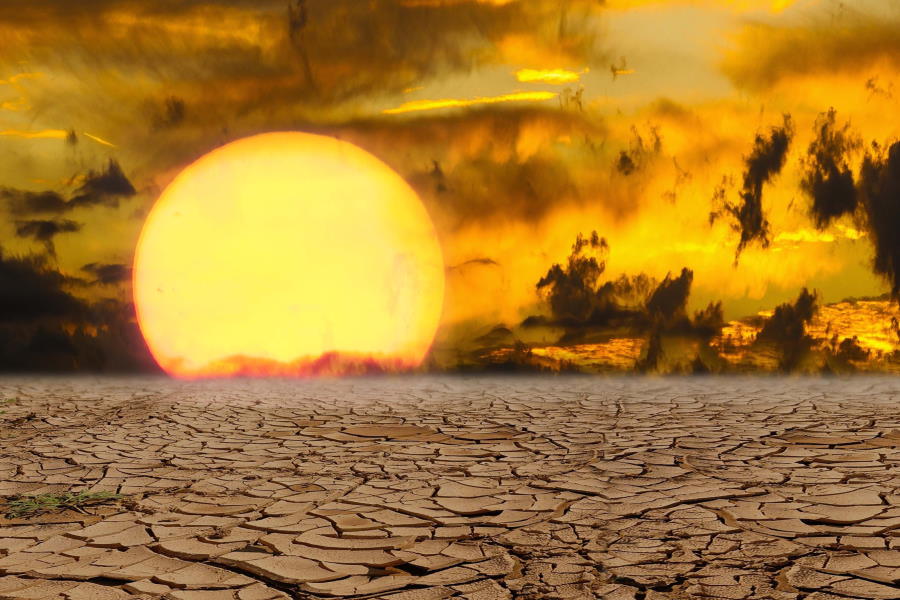
From “if it happens” to “when it will happen”. Storms, heatwaves, forest fires, floods, snowstorms, hurricanes and extreme, unpredictable phenomena leaving a trail of massive destruction are becoming increasingly common. This is the current reality, and the events sector has to live with it. What can we expect from the weather? And how should we deal with this situation?
Gil Lemos, a climatologist at the Dom Luís Institute in Portugal, explains that climate risk – and its impact on events – depends on three factors: hazard, that is, an extreme event or one with the potential to cause damage; exposure to it, whether by the population, infrastructure, or a combination of both (in the case of events); and vulnerability, which determines how the exposed elements react to a given hazard.
When it comes to climate and events, the tendency is to think only of those held outdoors. “Although outdoor events face direct exposure to extreme heat, intense solar radiation, strong winds, extreme rainfall and, in some locations, coastal phenomena, indoor events are not without risk,” says the climatologist from the Dom Luís Institute.
Examples of these risks include heatwaves that compromise the thermal safety of buildings with inadequate air conditioning, flash floods that affect access routes and car parks, electrical systems and the very stability of the infrastructure, and extreme wind events that cause prolonged power cuts and structural damage that may affect the users of the space.
“Events held by the sea (even if indoors) can also be suddenly affected by storm surges, due to the energy released by rough seas,” he emphasises, thereby advising the selection of locations that minimise users’ exposure to the effects of isolated or prolonged extreme events, given that “structural and logistical vulnerabilities can greatly increase the associated level of risk”.
How can climate risk be integrated into event planning?
The weather is often a factor taken into account in event planning, particularly for outdoor events. However, climate change highlights the need to integrate climate risk into every stage of the planning process.
According to the expert, this can be done in two ways. On the one hand, and from a long-term perspective, by incorporating climate projections at regional or local level, with a probabilistic analysis of the likelihood of extreme events occurring, covering all regions where such events might take place. This approach is useful for creating or strengthening contingency plans, for planning climate adaptation measures, and for defining protocols for postponement or cancellation based on safety thresholds.
However, long-term forecasts cannot predict the specific conditions on the day or days of the event. Hence, a second approach is required, based on the continuous monitoring of weather forecasts, with frequent updates in the days leading up to the event.
 Gil Lemos
“Weather monitoring, nowcasting – very short-term local forecasting – and tracking the development of forecasts more generally are actions that must be taken jointly and even continuously, both before and during the event,” he advises.
Nevertheless, the expert warns that forecasting can be difficult during periods of atmospheric instability, which can lead to sudden thunderstorms, heavy rainfall, hail (sometimes of considerable size) and even extreme wind events, such as downbursts or tornadoes. “In such situations, it is possible to estimate the probability of these phenomena occurring a few days in advance, with the 24–72 hours preceding the event being the most relevant for understanding the type of extreme phenomena that may occur and which areas may be affected.”
The importance of forecasting for corporate sustainability and reputation
Given that the climate is changing and that extreme weather events must be factored into the equation, what should companies in the sector do to address this reality? And how important is forecasting not only for the success of the event, but also for the safety of participants and the organisers’ own reputation?
“I believe it is essential to treat climate risk as a structural rather than a cyclical issue; it should be regarded as a permanent strategic variable linked to the business model.” For this reason, he argues that the ideal situation would be for “organisations to have at their disposal the best scientific knowledge on climate risk” says Gil Lemos, and also “its future projections and adaptation plans of an infrastructural, logistical and economic nature”.
He asserts that “there is a consensus within the scientific community that adaptation is also an economic opportunity, and can constitute a competitive advantage through the reduction of externalities associated with extreme events, transparency in communication, and a commitment to safety, which tends to strengthen the confidence of sponsors, participants and authorities”.
“Against a backdrop of growing public scrutiny, adapting to climate extremes is also a matter of reputation. Adopting a proactive approach grounded in scientific knowledge, coupled with a strong risk culture and adaptive planning, are now essential components of a responsible and sustainable organisation,” he emphasises.
A prior assessment of climate risk is essential for formulating appropriate emergency plans and streamlined evacuation protocols, including designated shelters and climate-resilient refuges. In summer, access to drinking water and the reinforcement or creation of air-conditioned spaces are essential. The presence and/or reinforcement of redundant electrical systems is equally vital, not only to ensure the services necessary for human comfort during events, but also to enable effective communication with participants, amongst participants and with the outside world, in the event of extreme weather phenomena.
Indicators to consider when planning an event
Depending on the event’s location and the short-term forecasts, the following should be monitored:
- temperature, with particular attention to the forecast and observed duration and intensity of heatwaves and the heat stress index, which takes into account relative humidity and, in some cases, solar radiation and wind;
- forecast and observed precipitation at hourly and sub-hourly scales;
- in areas close to, or within, floodplains: accumulated precipitation over the preceding days, which influences the soil’s capacity to retain additional water;
- wind: forecast maximum gusts;
- during dry and hot periods, monitoring of the fire weather index, particularly in urban-forest interface events;
- in coastal events: interaction between sea state, tides and other factors contributing to storm surges and flooding.
Communicating climate risk without causing panic
A growing understanding of the concept of climate risk can help event organisers communicate more effectively with participants. Here are some points to bear in mind when communicating:
- clear information, conveyed transparently and based on accurate, scientific data
- putting the risk into context, to help participants adopt the appropriate behaviour in an emergency
- communicating the measures to be adopted and the actions expected of participants in the face of a given circumstance
- emphasising that there is always a degree of uncertainty associated with forecasts
- communication should not only take place when the extreme event is imminent
- providing advance information that the event has climate risk protocols in place, and that decisions may be taken based on critical thresholds (this creates realistic expectations and reduces abrupt emotional reactions should it be necessary to change plans)
- clarification of what the organisation is doing or what is expected in the event of extreme weather or an emergency (e.g. the availability of weather shelters, reinforced medical teams, evacuation plans, etc.).